Why Your Emotions Are Your Biggest Investment Risk

Forrest Leichtberg, MBA
Forrest is a California-registered fiduciary RIA and financial coach who advises individuals and families on building lasting wealth. He brings C-suite experience and a whole-person philosophy to every engagement.
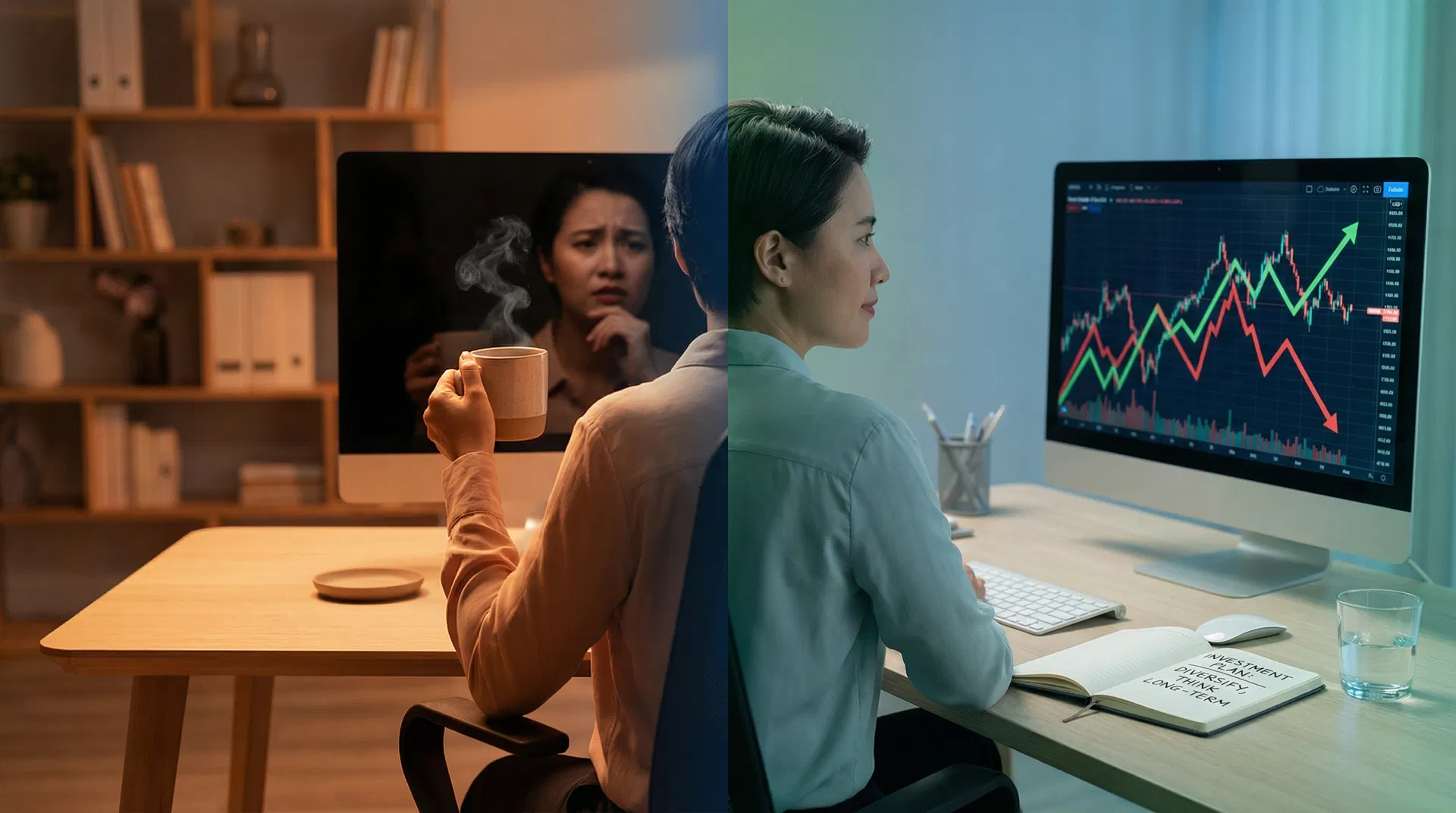
In March of 2020, the S&P 500 dropped 34% in 33 days. It was the fastest decline of that magnitude in market history. Millions of investors sold — locking in their losses, moving to cash, waiting for the situation to become clearer before they returned.
By December of that year, the market had not only recovered but had gained 18% from where it started. The investors who sold missed most or all of that recovery. The investors who did nothing were fine.
This is not an unusual story. It is, in one form or another, the story of investing — repeated in every market cycle, in every generation. And the question it raises is not whether the pattern exists, because it clearly does. The question is why intelligent, well-informed people keep repeating it.
The Gap That Costs You Everything
DALBAR's annual research consistently finds the same result: the average investor significantly underperforms the very funds they invest in. Not because they chose the wrong funds. Because they bought and sold at the wrong times — buying after markets had already risen, selling after they had already fallen, doing the opposite of what the math would recommend, consistently, because the response was emotional rather than rational.
This is not a knowledge gap. Most investors who sell in a panic know, on some level, that they are probably making a mistake. It is an emotional gap. And closing it is not primarily a matter of learning more about markets. It is a matter of understanding yourself — your own patterns, your own history, your own relationship with uncertainty and loss.
What Is Actually Happening
Your brain is not designed for investing. It is designed for survival. The same neural circuitry that protected your ancestors from physical threats is now responding to stock market fluctuations — and it cannot tell the difference between a predator and a portfolio decline. When markets drop sharply, stress hormones flood your system, your time horizon compresses, and the urge to act becomes overwhelming. Doing nothing feels irresponsible. Selling feels like taking control.
The neuroassociations you carry around money compound this. If money was associated with anxiety or scarcity in your early life — if financial stress was a constant presence in your household, if you absorbed the message that there is never enough — then market volatility does not simply trigger financial concern. It triggers the full emotional weight of those earlier experiences. The fear is not proportionate to the actual risk. It is proportionate to the emotional history you bring to it.
The Inner Work of Investing
Becoming a better investor is, in significant part, an interior project.
It requires understanding your own emotional patterns — the specific fears that get activated when markets move, and where those fears actually come from. It requires connecting your portfolio to a life vision that is specific and meaningful enough to give you the patience to stay the course.
The Structural Disciplines
The inner work matters. So do the practical structures that make it easier to behave well even when your emotions are pulling in the other direction.
Write an investment policy statement before the market moves — your philosophy, your asset allocation, your commitment to staying the course through volatility. When uncertainty arrives, you are following a plan made from a place of clarity, not making a new decision from a place of fear. Automate your contributions so that dollar-cost averaging happens regardless of how you feel on any given day. Limit your exposure to financial news, which is in the business of generating attention and has no particular interest in your long-term financial wellbeing.
None of these disciplines are complicated. What makes them difficult is that they require you to act against your instincts at precisely the moments when your instincts feel most urgent.
The Investor You Are Becoming
The best investors are not the ones who know the most about markets. They are the ones who know the most about themselves — who have done the inner work, built the structural disciplines, and connected their portfolio to a life vision that gives them the perspective to stay the course when everything around them is suggesting otherwise.
That is an interior project as much as a financial one.
Forrest Leichtberg is a fee-only fiduciary advisor and fractional executive.**
Ready to Apply These Ideas to Your Life?
Book a free 45-minute discovery call. We'll talk through your specific situation — whether it's personal finances, investment strategy, or building long-term wealth.